Why are we still talking about Xiaohongshu today?
In China, Xiaohongshu (also known as RedNote) has evolved far beyond a lifestyle-sharing platform. For many younger consumers, it is now a key place to search, compare and make travel decisions. Whether they are researching dive courses, liveaboards, destinations or equipment, Xiaohongshu is often one of the first places they look.
Xiaohongshu (RedNote) is not new, but the way people use it has changed. What began as a lifestyle and recommendation platform has increasingly become a search and discovery tool - particularly for travel, food, outdoor activities and other experience-led purchases. For many younger Chinese travellers, searching Xiaohongshu is now a natural part of planning a trip.
Diving fits naturally into this ecosystem. PADI China has been tapping into the overlap between diving and skiing communities for years through the idea of “蓝白双修” - blue and white pursuits, reflecting how the same young, experience-driven travellers often move between the ocean in summer and the mountains in winter. More broadly, Xiaohongshu has become an important place where people discover destinations, operators and experiences before making a decision.
The platform is also becoming more international. In early 2025, the so-called “TikTok refugee” wave brought hundreds of thousands of overseas users onto Xiaohongshu almost overnight. The initial buzz has cooled, but international creators remain part of the platform, while Xiaohongshu has long been widely used by Chinese communities living overseas. For dive operators, that means its reach is not limited to travellers physically based in mainland China.
This is why language is not necessarily the biggest barrier - visibility is. You do not need a Chinese marketing team before establishing a presence on Xiaohongshu. But if travellers search for your destination, resort or liveaboard and find nothing, you are simply harder to discover.
For operators interested in the Chinese market, being searchable on the platforms your customers actually use is increasingly the starting point.
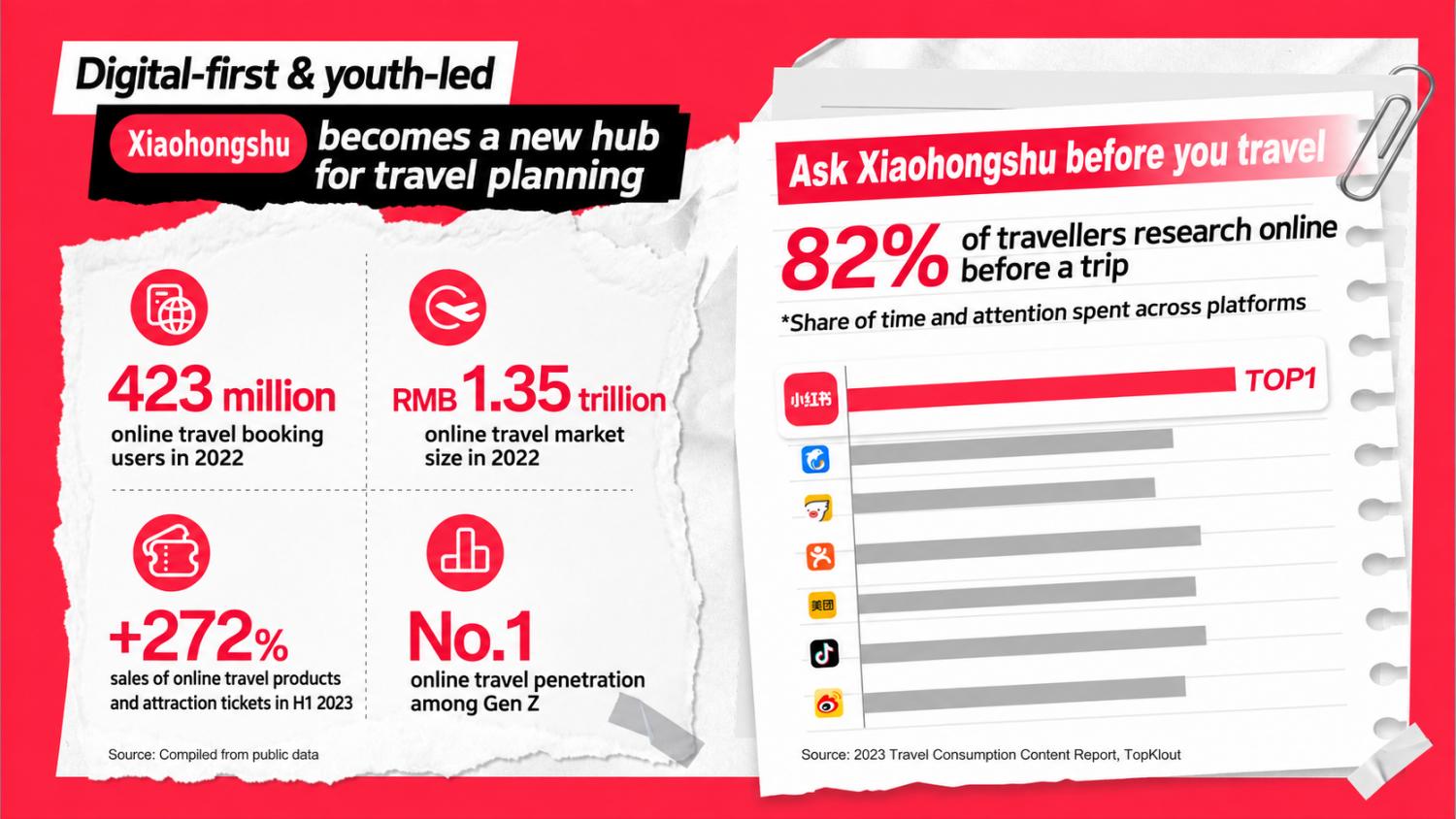
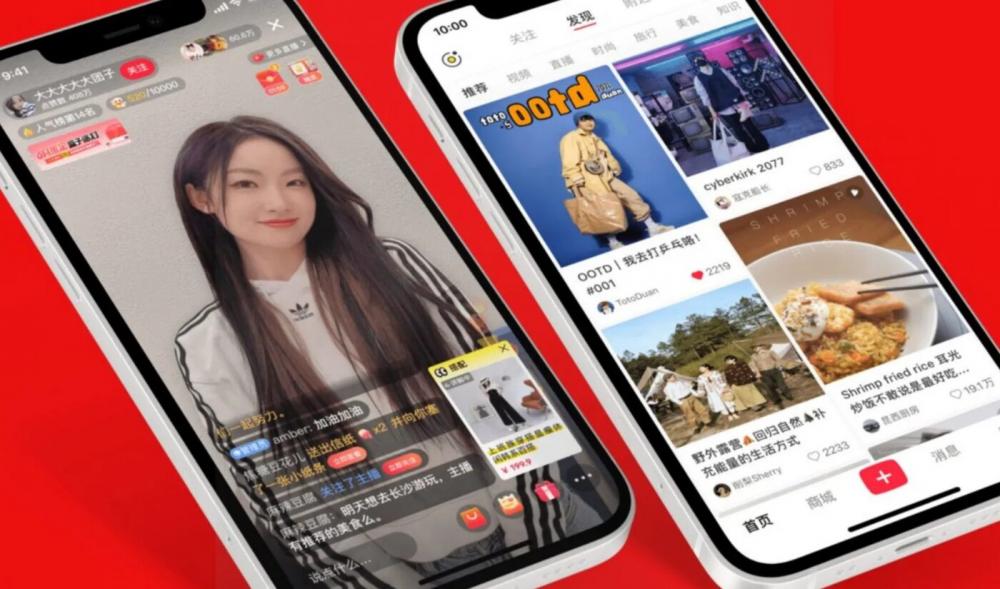
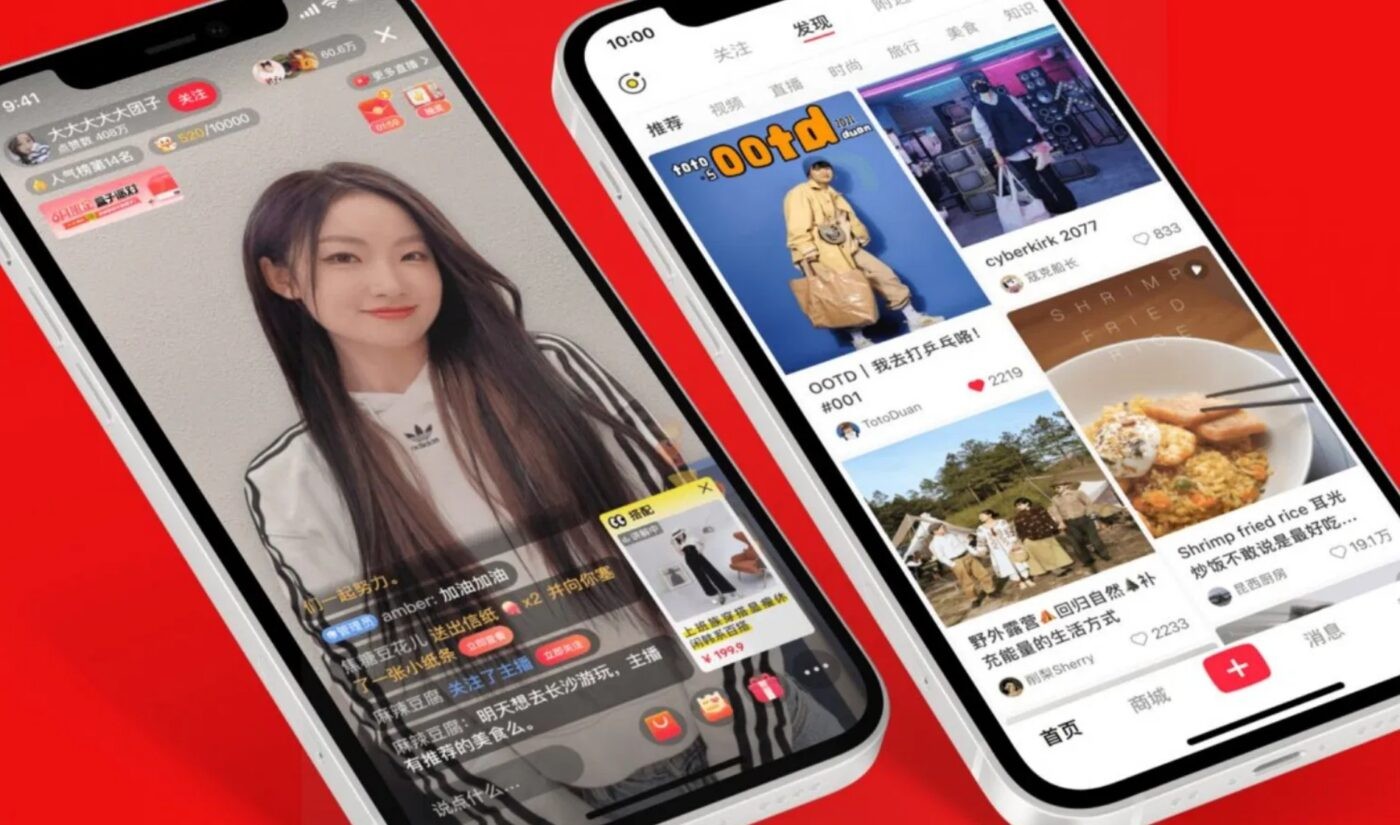
Source: traveldaily.cn, image recreated by Chat GPT
Let's learn from what worked
For this article, we analysed five diving-related posts that performed strongly in 2026, each representing a different style of content. By looking at what they posted, how audiences responded and why each one worked, we can better understand what captures attention and drives engagement among Chinese travellers.
Content direction #1: Marine life that creates an emotional connection
Featured Post: “Today's happiness was given by this guy "
Post Description: A simple 25-second underwater video of a curious baby seal swimming around a diver, nudging their fins and behaving almost like a playful puppy. The footage is natural, unpolished and visually clean.
Trending Keywords: Baby Seal, Ocean Animals That Amased Me, Ocean Romance
Engagement Data: 100,000+ Likes | 30,000 Saves | 4,000 Comments
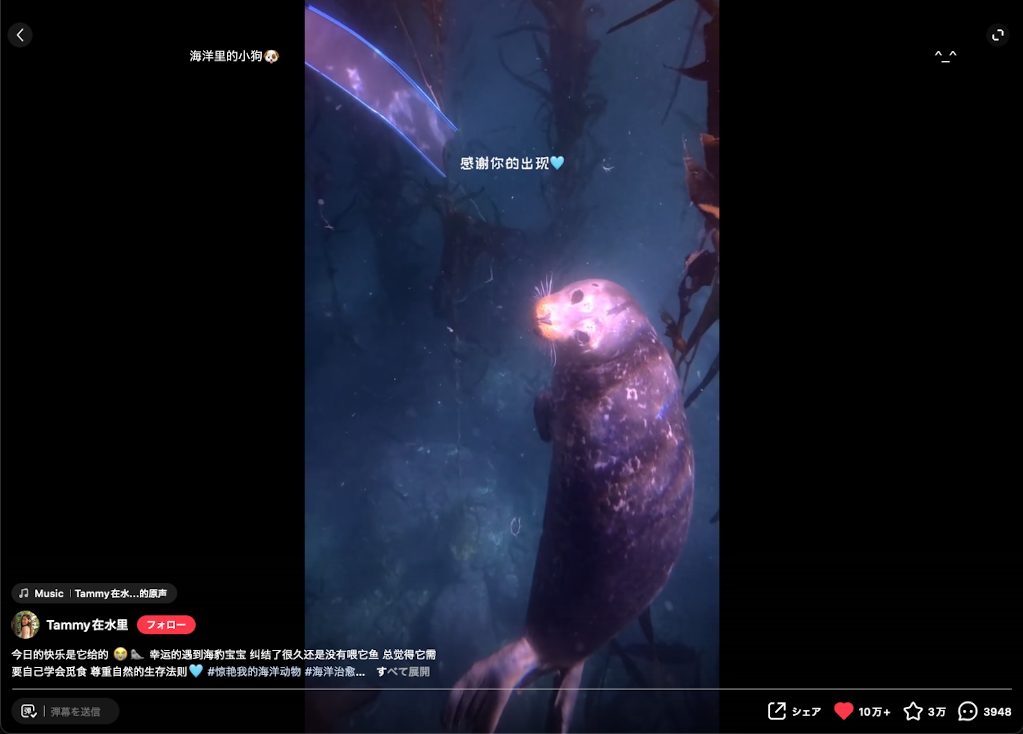
HelloDive Observation:
Big-animal encounters such as whale sharks, hammerheads and manta rays naturally attract attention, but this post shows that emotional connection can be just as powerful as rarity. The seal’s playful, almost pet-like behaviour made the moment instantly relatable, even to people who are not divers.
For operators, this is a useful reminder that everyday marine encounters can be highly valuable content. A turtle swimming alongside a guest, a dugong appearing near the boat or even a curious clownfish can become the kind of authentic moment that audiences remember and share.
Content direction #2: Make diving relatable through humour
Featured Post: "Finally my turn to use this background music! Can't go to work anymore!"
Post Description: Beautiful beaches, boat rides and underwater encounters with turtles and schools of fish - paired not with cinematic music, but with trending humorous audio about not wanting to go back to work. The contrast turns a typical dive trip video into something instantly more relatable and shareable.
Trending Keywords: BGM, No Work, Scuba Diving, May Day Travel
Engagement Data: 16,000 Likes | 6,600+ Saves | 448 Comments
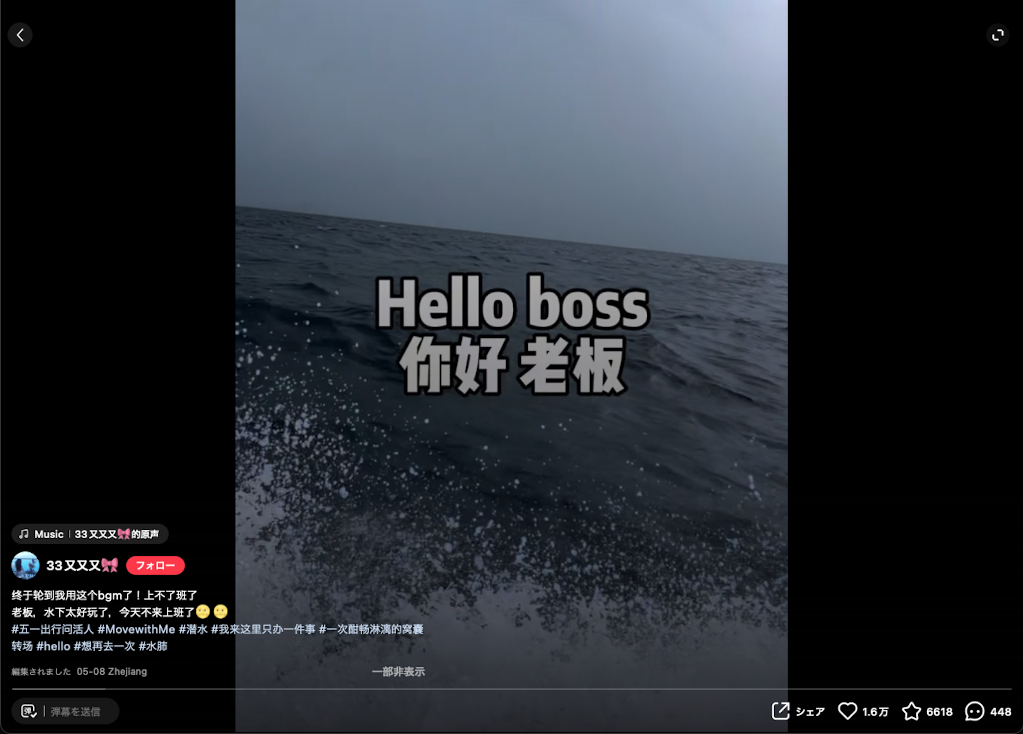
HelloDive Observation:
This post works because it connects diving with a feeling many young travellers already understand: wanting a break from work and everyday routines. Instead of presenting diving purely as an adventure or technical sport, the creator turns the trip into a humorous escape from daily life.
For operators, the lesson is simple: not every post needs to focus on dramatic marine encounters or professional diving. Humour, personality and relatable travel moments can make your destination feel much more accessible - and give audiences a reason to share it even if they are not divers yet.
Content direction #3: Build trust through expert, educational content
Featured Post: "We filmed Great White Sharks!"
Post Description: A 20-minute expedition-style video exploring great white shark behaviour, cage-diving regulations, safety procedures and the people behind the operation. Rather than following a fast-paced short-video format, it relies on strong visuals, expert commentary and detailed behind-the-scenes storytelling.
Trending Keywords: Science Education, Great White Sharks, Underwater Photography
Engagement Data: 23,000 Likes | 4,000+ Saves | 596 Comments
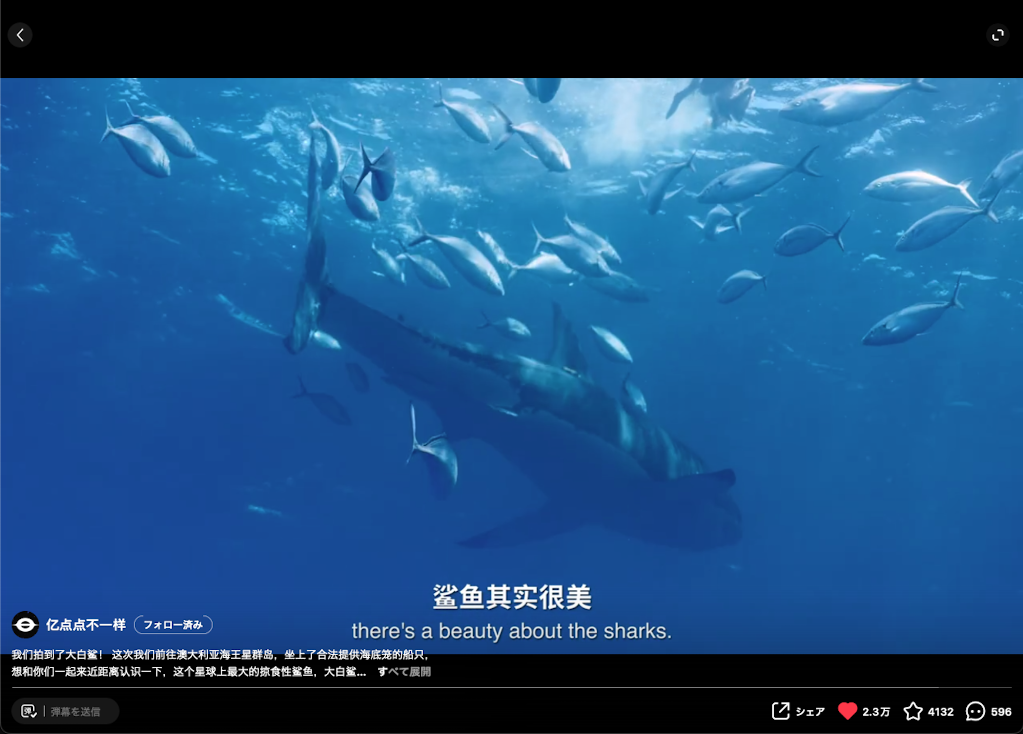
HelloDive Observation:
Xiaohongshu is often associated with short, fast-moving content, but this post shows that audiences will stay for depth when the subject and expertise are strong.
By explaining shark behaviour, safety procedures and the realities of cage diving, the video does more than entertain. It helps remove uncertainty, builds credibility and gives viewers confidence in an experience they may otherwise find intimidating.
For operators, this is a reminder that your knowledge is also valuable content. Guides, marine biologists, instructors and experienced crew can all help turn operational expertise into stories that educate audiences and build trust before they travel.
Content direction #4: Create content people want to save
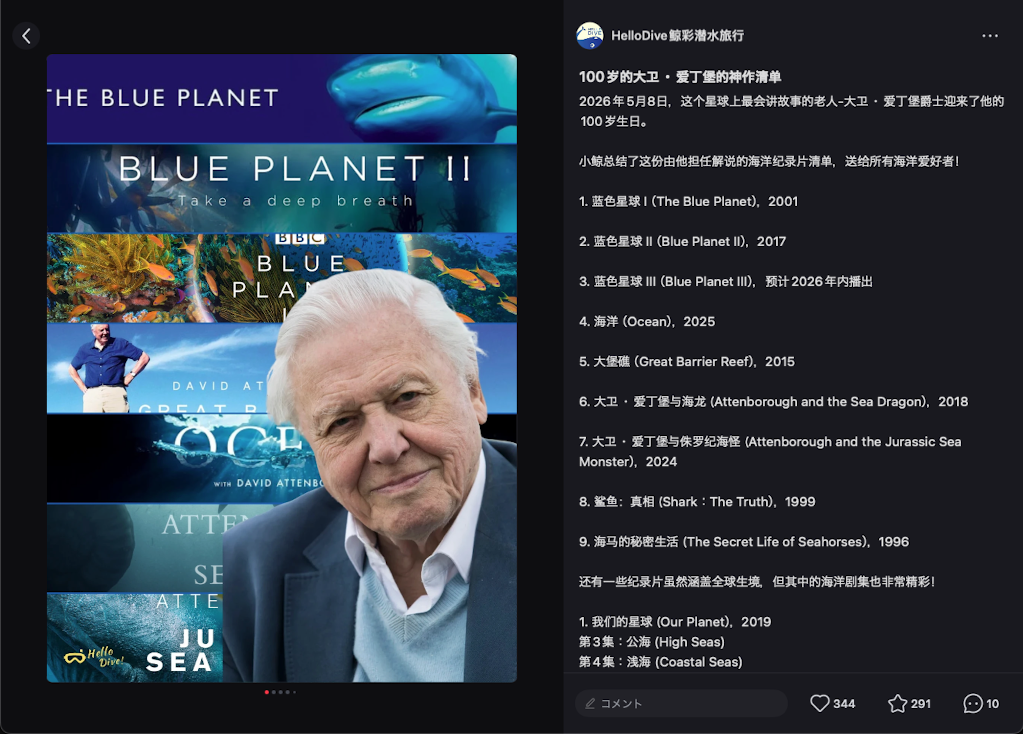
Featured Post: "100th Birthday Masterpiece List for Sir David Attenborough"
Post Description: An image-and-text post created by the HelloDive team to honour Sir David Attenborough’s 100th birthday, compiling a list of classic marine documentaries narrated by him. There was no product promotion or itinerary sales pitch — the value came simply from organising useful information in one place.
Trending Keywords: Blue Planet, David Attenborough, Marine Documentaries
Engagement Data: 344 Likes | 291 Saves | 10 Comments
HelloDive Observation:
On Xiaohongshu, likes are only part of the story. Saves are particularly valuable because they suggest that users see a post as useful enough to return to later. In this case, the number of saves was almost as high as the number of likes - a strong signal that the content delivered practical value.
For operators, useful content does not always need to sell a trip directly. Dive-site guides, seasonal marine-life calendars, packing lists, transfer information or simple “things to know before you go” posts can all give travellers a reason to save your content and come back to your brand later.
Presentation matters too. A clear cover and an immediately understandable topic helped users recognise the value of this post while scrolling. Sometimes, being useful and easy to understand is more effective than being promotional.
Content direction #5: Build trust through genuine traveller reviews
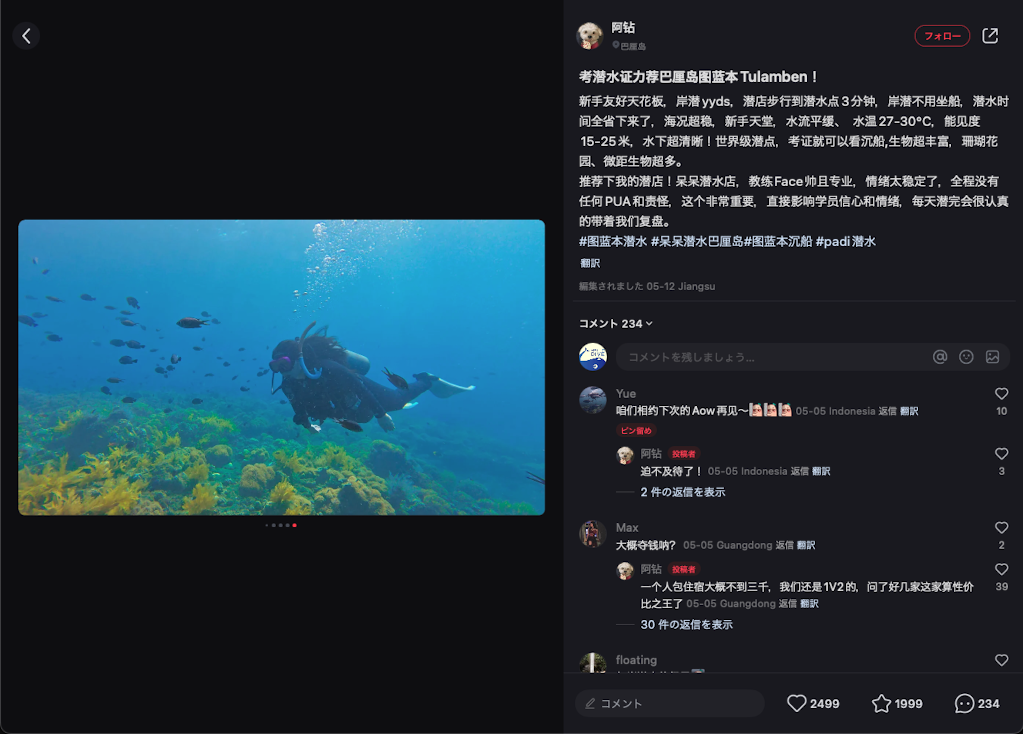
Featured Post: "Highly recommend Tulamben, Bali for getting your dive cert!"
Post Description: A straightforward review from an ordinary Xiaohongshu user documenting her dive certification experience in Tulamben. There are no polished layouts or promotional claims - just casual underwater photos and practical details about water temperature, visibility, wreck diving, the local dive shop and her instructor.
Trending Keywords: Tulamben Diving, Dive Certification, Bali Shipwreck
Engagement Data: 2,500 Likes | 2000 Saves | 234 Comments
HelloDive Observation:
This post shows how powerful simple, first-hand experiences can be. Rather than trying to look like an advertisement, it reads like advice from another traveller - which makes the information feel more approachable and easier to trust.
The comments are especially revealing. Users asked practical follow-up questions about dive shops, wetsuit thickness, pricing and camera equipment, turning one personal review into an active conversation around the destination.
For operators, this is a strong reminder that not every piece of content needs to be highly produced. Genuine guest experiences, instructor recommendations and everyday trip details can often answer the exact questions future travellers are already asking.
The real takeaway: visibility comes first
After looking at these five examples, one thing becomes clear: Chinese audiences are not looking for a completely different kind of content. People still respond to interesting stories, useful information, genuine experiences, humour and emotional connection.
The difference is where they are looking.
For many Chinese travellers, Xiaohongshu is now part of the discovery process. So before worrying about perfect Chinese copy or a sophisticated content strategy, the first step is simply to be visible and searchable on the platform. If someone searches for your resort, liveaboard, destination or dive experience, being there is already a very good start.
But Xiaohongshu has its own culture
Being on Xiaohongshu does not mean turning every post into an advertisement. The platform is built around genuine sharing, and overly promotional content or obvious attempts to drive users off-platform can quickly work against you.
The strongest content often comes from what operators already have: real marine encounters, useful local knowledge, guest experiences, behind-the-scenes moments and the people who make the operation special.
Xiaohongshu is also where travellers share criticism, ask detailed questions and compare experiences, so understanding the platform is about more than simply posting content.
If you want to build or strengthen your presence on Xiaohongshu, understand what content works, or navigate the platform more confidently, the HelloDive team would be happy to explore how we can help.