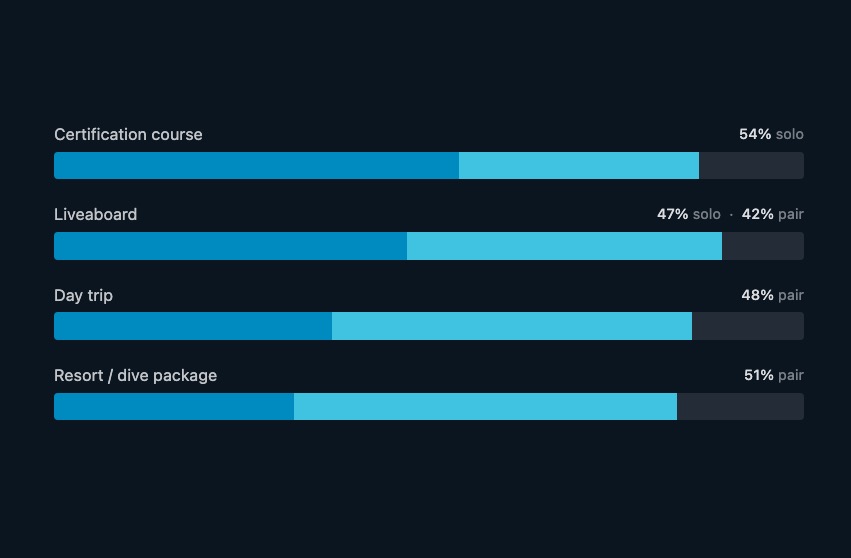
To explore this further, we analysed HelloDive booking data from March 2025 to September 2026, focusing on two groups at opposite ends of the booking window:
Early bird: bookings made 90 days or more before departure
Last-minute: bookings made fewer than 30 days before departure
We then compared the two groups across booking volume, product preference, destination patterns and average order value to see where the differences emerge.
Two booking windows, two very different profiles
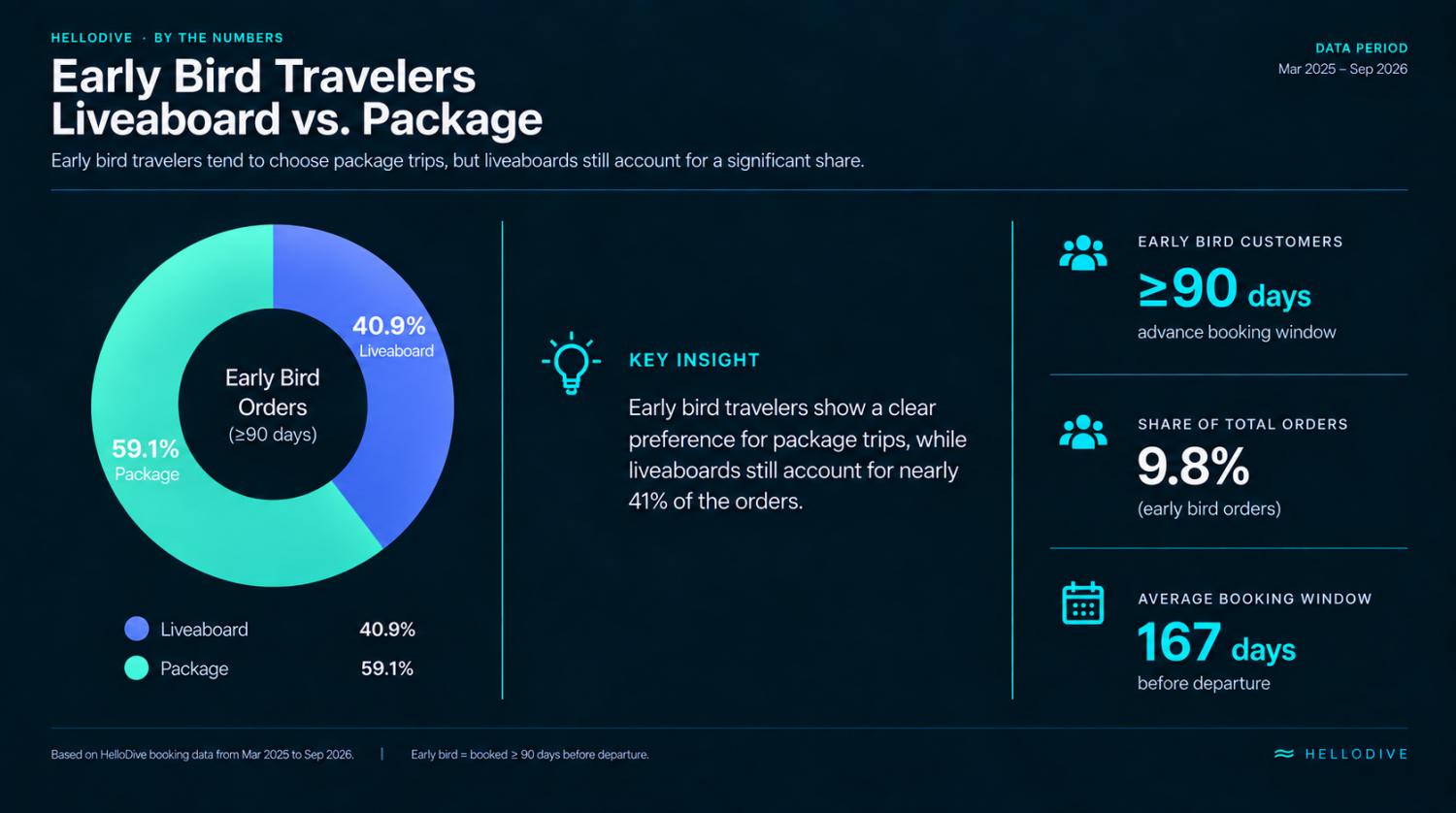
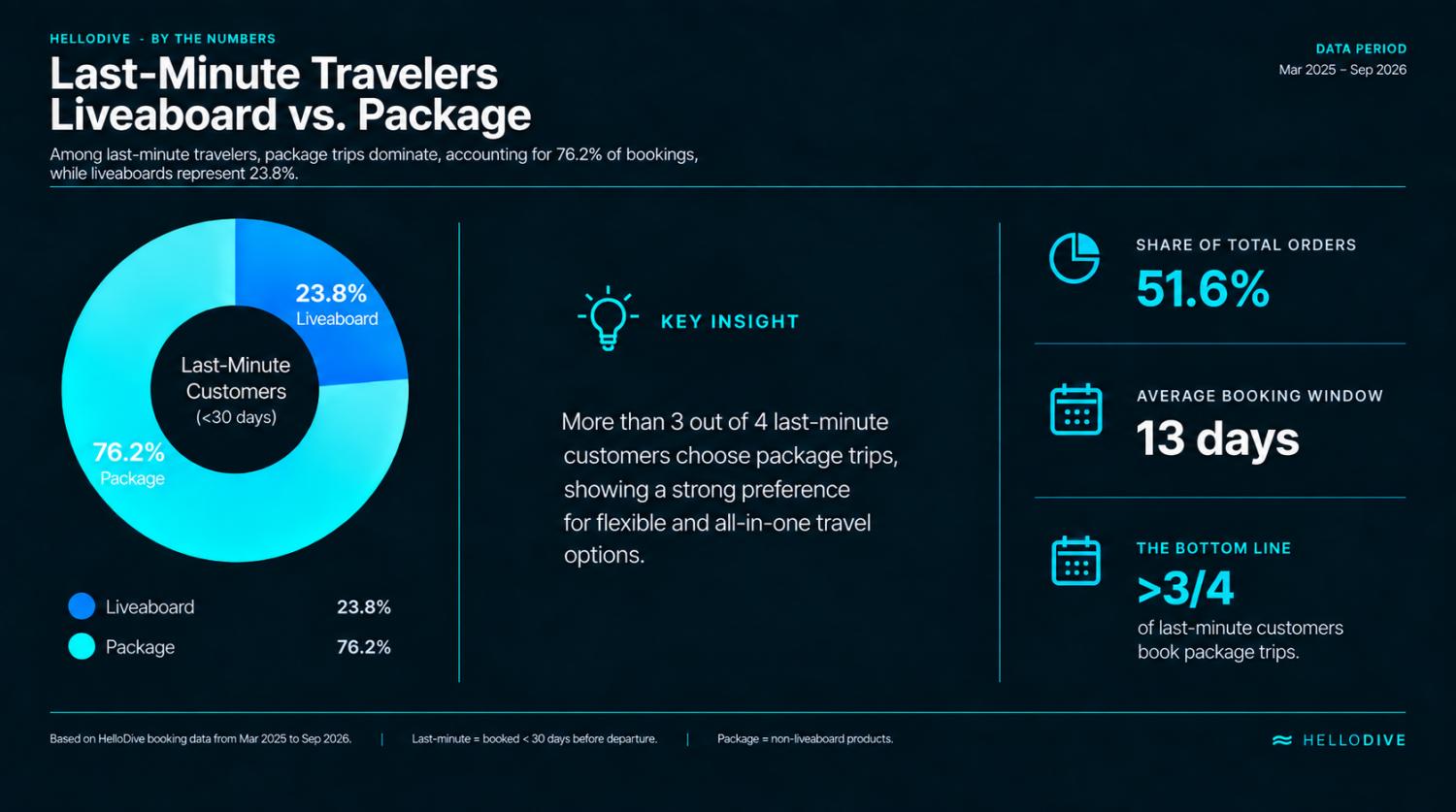
The first difference is scale. Last-minute bookings represent a much larger part of HelloDive's business, showing how common short decision cycles remain among Chinese dive travellers.
Early-bird customers, however, behave differently. They plan considerably further ahead and show a more balanced mix between liveaboards and package trips. Last-minute travellers lean much more heavily towards packages.
This suggests that booking lead time is not simply about when someone purchases. It is also connected to the type of trip they are considering.
For more complex, higher-value or capacity-limited experiences, travellers may need more time to coordinate flights, annual leave and travel companions. More flexible package trips, on the other hand, can remain attractive much closer to departure.
Destination matters, but so does the product
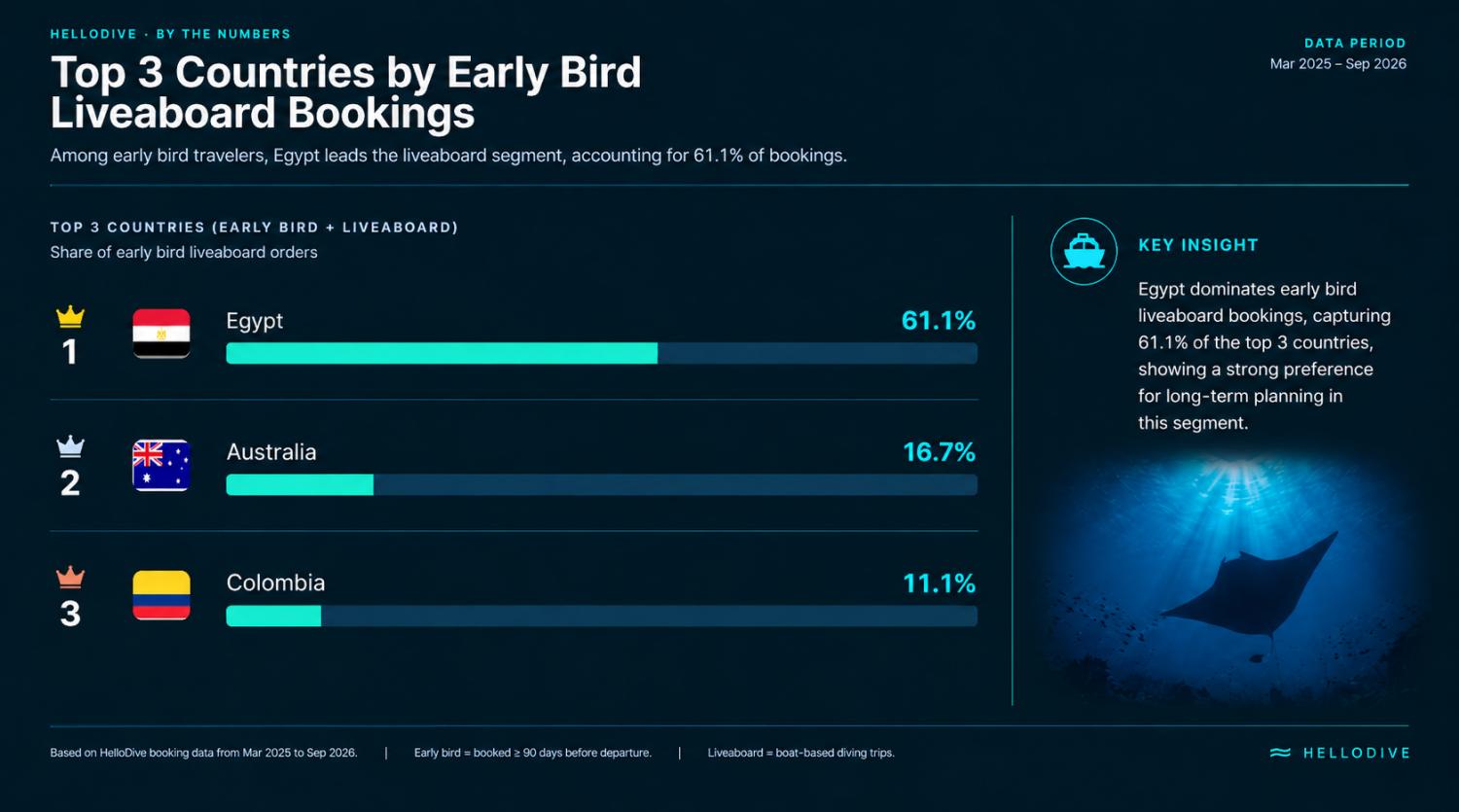
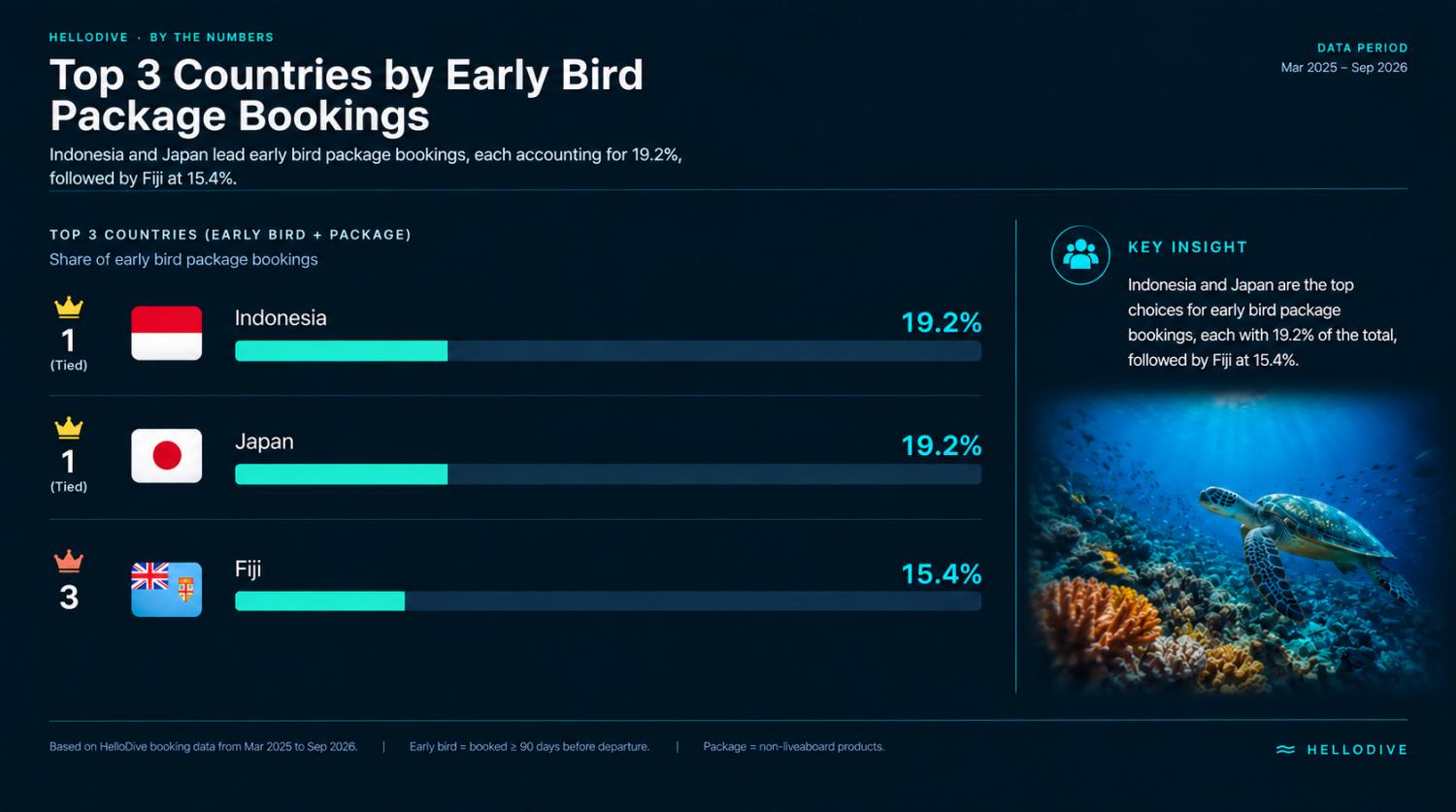
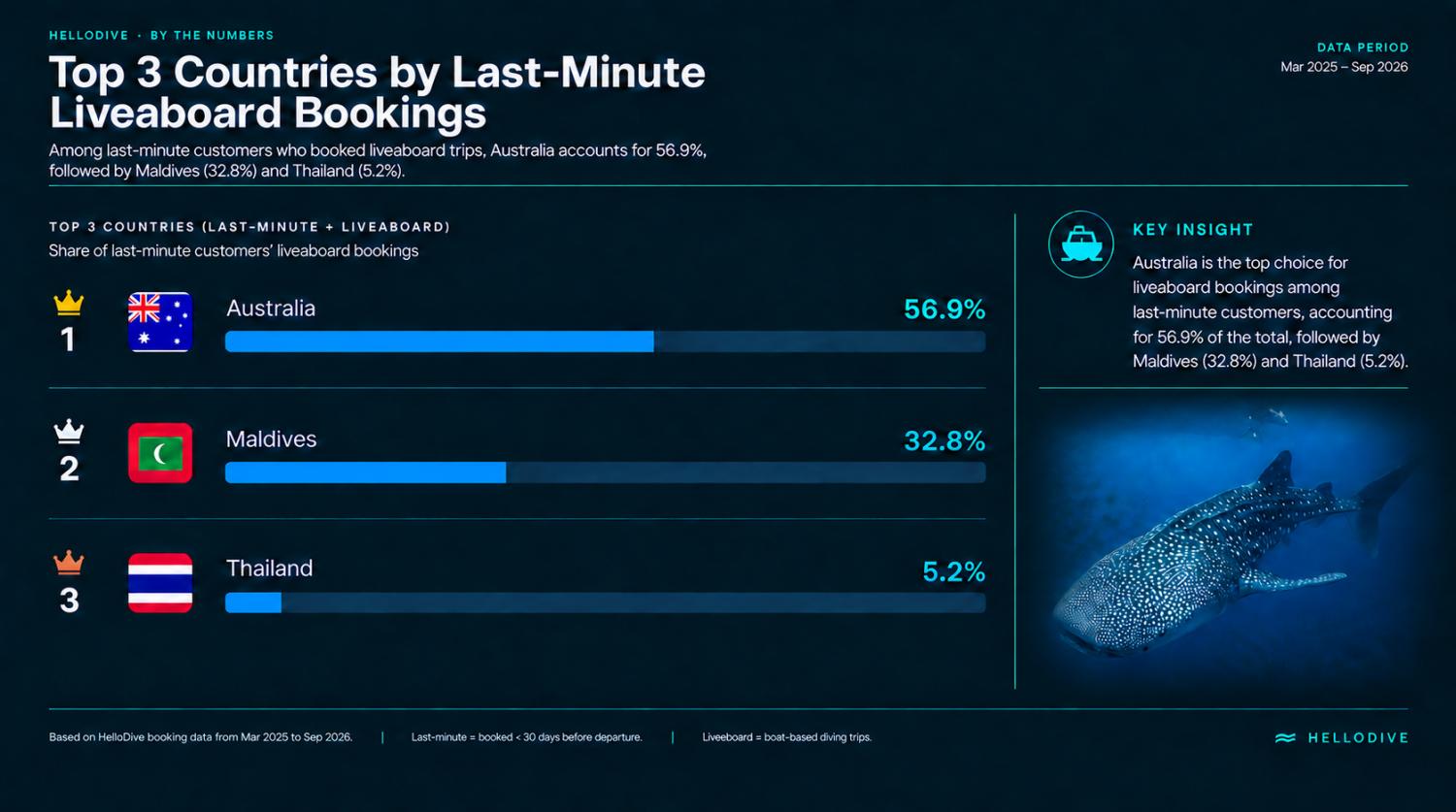
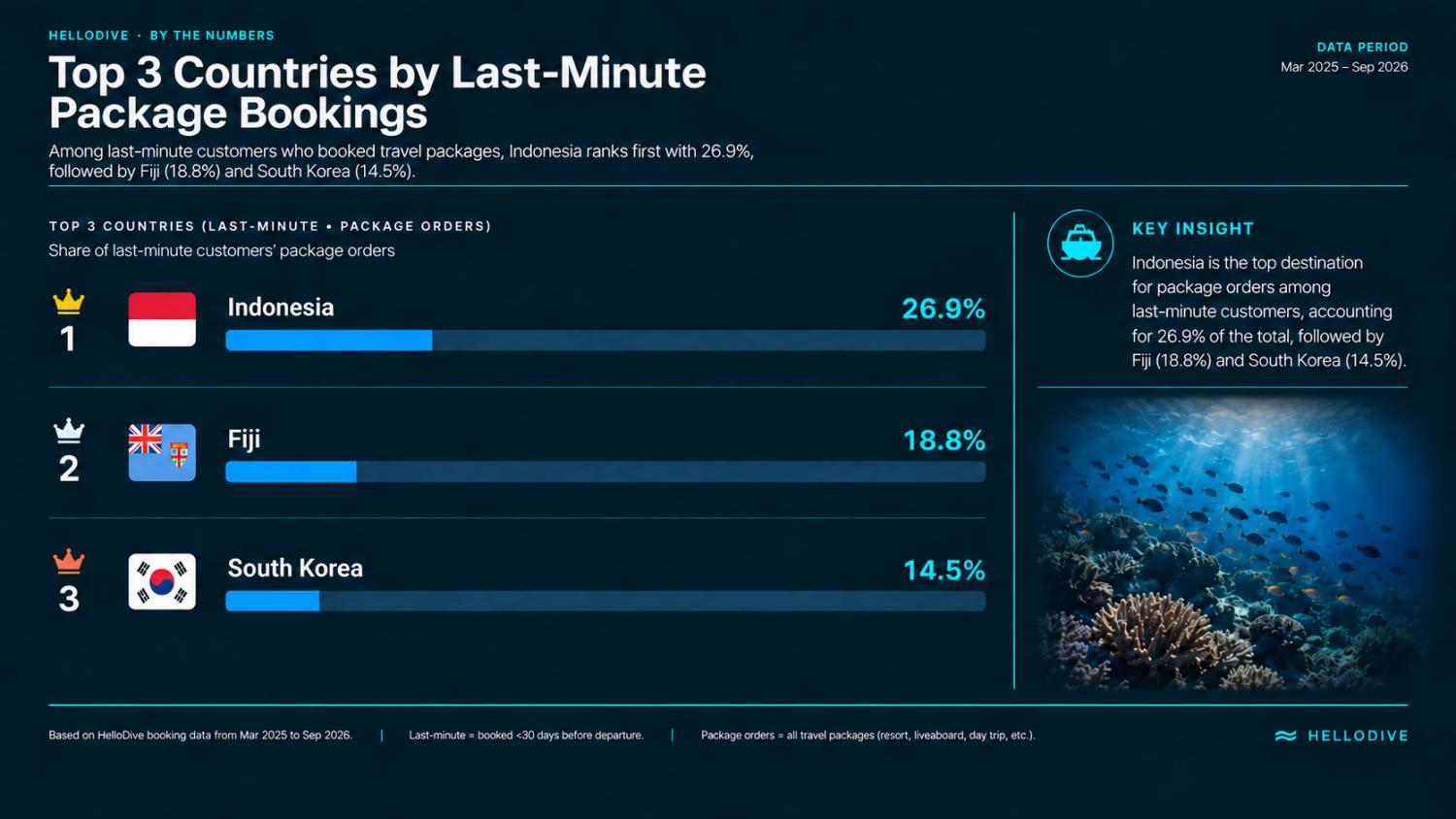
The destination data adds another layer.
There is no single rule that says one destination is always booked early and another is always booked late. The pattern often changes depending on what the customer is booking within that destination.
Long-haul and highly seasonal liveaboard products can attract travellers who plan months ahead, while other liveaboards still generate meaningful demand close to departure. Package bookings show the same variation: some destinations appear strongly in both early-bird and last-minute segments.
For suppliers, this is an important distinction. It may be more useful to think in terms of a destination + product + booking window combination rather than applying one sales strategy to an entire country.
The same destination can attract a very different customer depending on the experience being sold.
Early planning also comes with higher value
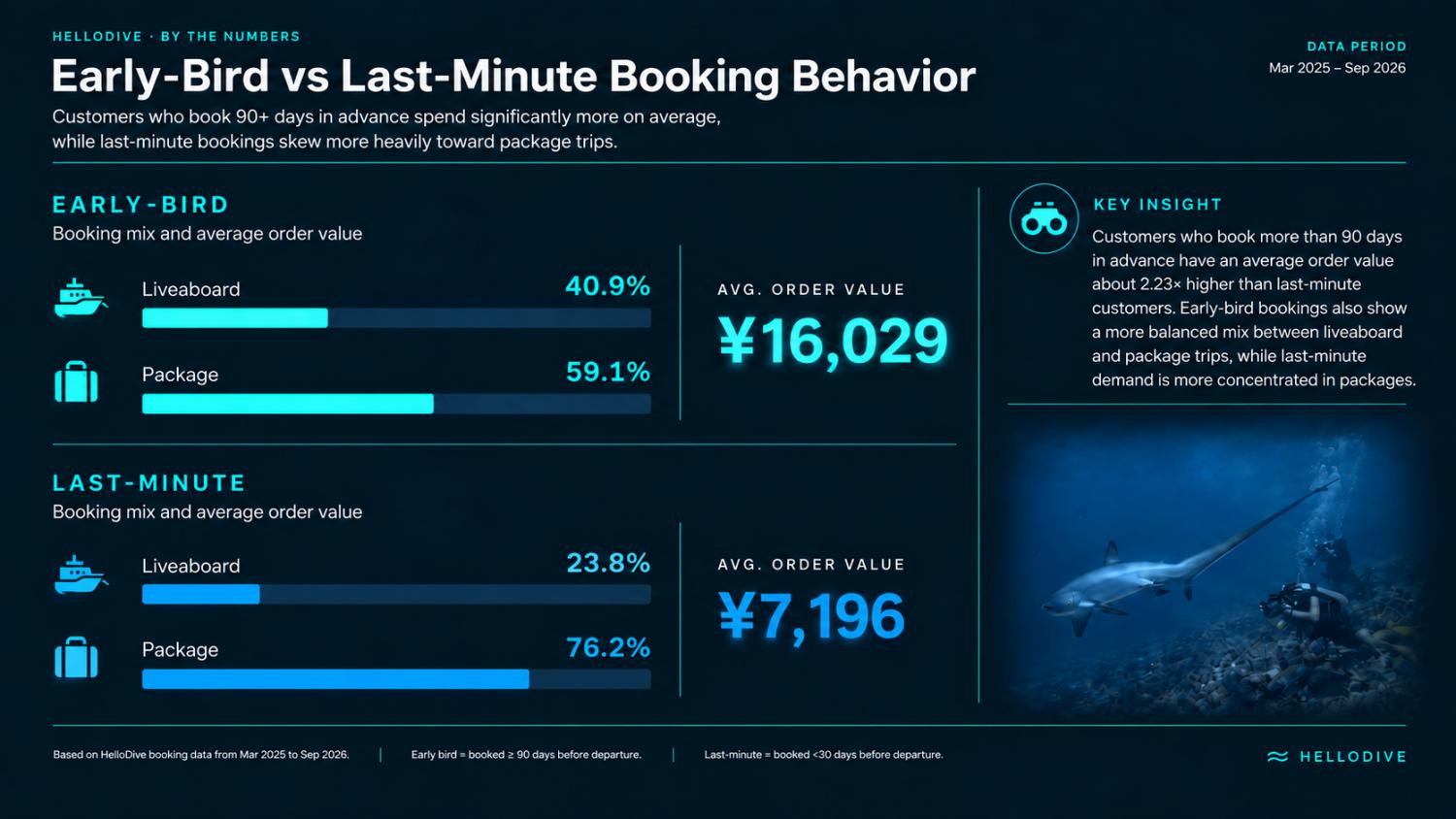
The clearest difference appears when we compare average order value.
Early-bird customers spend more than twice as much per order on average as last-minute customers. This is consistent with their higher share of liveaboard bookings and their greater willingness to commit to more substantial trips well before departure.
Last-minute demand, meanwhile, brings something equally important: volume.
For suppliers, the two segments therefore serve different purposes. Early-bird demand can secure higher-value business further in advance, while last-minute demand can generate bookings closer to departure and help convert remaining availability.
What this means for suppliers
Rather than choosing between an early-bird strategy and a last-minute strategy, it may be more useful to build both into your China-market sales cycle.
For trips that are higher in value, limited in capacity, seasonal or require more complicated travel planning, communicating availability early gives Chinese travellers more time to make the decision.
As departure gets closer, the message can change. Clear remaining availability, straightforward packages and easy-to-understand travel arrangements can become more relevant to customers making faster decisions.
The right balance will naturally vary by destination and product. The data does not point to one universal booking window — it shows why understanding the booking rhythm of each product matters.
Final takeaway
Chinese dive travellers do not all plan their trips the same way.
Some commit months in advance to higher-value or more complex experiences. Others make their decision only weeks before departure. Both groups matter, but they represent different opportunities for suppliers.
The goal is not to decide whether to sell early or sell late. It is to understand which products benefit from which booking window — and market them accordingly.
Sell early for value. Sell late for volume. Match the strategy to the destination and product.